
Don’t Worry About Frown Lines, Be Happy Again

There are people with facial contours that suggest a frown or sadness, even when they’re happy or content.

NEWPORT BEACH
949-650-8882
BEVERLY HILLS
310-467-2180
There are people with facial contours that suggest a frown or sadness, even when they’re happy or content.
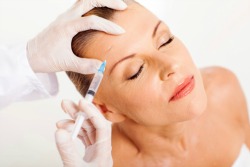
Botox is the most popular of all cosmetic procedures, by a wide margin. Of the 15.1 million cosmetic procedures performed in the United States in 2013, the American Society of Plastic Surgeons reports that 13.4 million were of the “minimally invasive” type — injections, peels, laser treatments, and microdermabrasion. Of that group, 6.3 million were Botox — a 3 percent increase over the 6.1 million Botox procedures done in 2012.
Many patients visit facial plastic surgeon Dr. Batniji to treat obvious signs of aging that gradually occur. A popular procedure is facelift surgery, which is designed to strengthen the underlying structure of the face and remove excess tissue such as skin and fat. While the transformative surgery can create a significantly more youthful look, an overzealous surgeon may create unrealistic results.
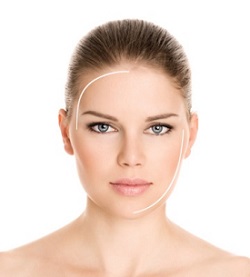
Elective cosmetic procedures are a great way to permanently improve a person’s looks and self-esteem, but what happens when surgery creates the opposite effect? Following facial plastics, one may feel his or her face has been overcorrected.

Undergoing facial plastic surgery is a momentous occasion in any patient’s life. As humans, we are seemingly programmed to continually strive for greater things, be it higher education, a promotion at work, or any other way to improve our own lives. Altering the look of the face may be necessary for the improvement of a person’s health or self-esteem, and certainly offers personal gratification along with functional and aesthetic benefits.