What to Expect During Recovery
Looking for the Otoplasty Surgery Procedure Page?
This page covers clinical post-operative care instructions for existing patients. If you are a prospective patient looking for information on otoplasty surgical techniques, pricing, recovery timelines, and before-and-after photos, please visit our comprehensive page:
View Otoplasty Procedure
The following sensations are common and expected during early healing, and typically improve over weeks to months:
- Tightness, firmness, or a “pulled” sensation of the ears
- Mild asymmetry during early healing (the two sides often swell at slightly different rates)
- Temporary contour irregularities that smooth out over weeks to a few months
- Numbness of the ears and the skin in front of and around the ears — this can last weeks to several months and is normal
- Tingling, itching, and occasional brief “electric zinger” sensations as sensation nerves heal
- Mild discomfort, especially when lying on the ears
- Final results typically become apparent over several months as swelling fully resolves
Before Your Surgery
- Purchase a headband to wear after surgery. Please make sure the headband is wide enough to cover most, if not all, of the ear structures.
- Fill your prescriptions and begin taking the prescribed antibiotics the day before the procedure. You do not need to take the antibiotics on the day of the procedure.
Wound Care
- A dressing will be placed around your head and ears immediately after surgery and is typically removed 1–2 days after surgery. At that time, you will transition to your headband. Please bring your headband to your appointment 1–2 days after surgery so that we may show you how to position it.
- Open a fresh bottle of hypochlorous acid around the time of surgery for best potency.
- Spray the back of the ears directly with hypochlorous acid spray 3–4 times daily while awake. Allow it to dry for 1 minute, then apply a thin layer of Vaseline to the sutures.
- After spraying hypochlorous acid and applying Vaseline, wear the headband. Wear the headband as much as possible during the first week after surgery.
- After the first week of surgery, you no longer need to clean the sutures with hypochlorous acid, and you no longer need to apply Vaseline.
- After the first week of surgery, you will wear your headband during sleep for the next 4 weeks.
- Do not pick at crusts along the sutures. Allow the crusts to soften with the treatments of hypochlorous acid.
- For the first month, avoid direct sun exposure to the incision line. If you must be outdoors, cover the area with a scarf, high collar, or wide-brimmed hat. Sun exposure within the first month of surgery may result in hyperpigmentation of the scars.
- Once fully healed at approximately 1 month after surgery, apply a broad-spectrum SPF 30+ sunscreen to the incision lines for 6–12 months to minimize hyperpigmentation of the scars.
- Silicone-based scar gel can be used 1 month after surgery.
Hair, Ears, and Glasses
- Be very gentle with your hair. Do not pull a comb or brush through the incisions around the ears.
- Do not color, highlight, perm, or chemically treat your hair for 4 weeks after surgery.
- Do not wear earrings until cleared by Dr. Batniji, typically 3–4 weeks after surgery. When you do resume, start with lightweight earrings.
- Carefully place glasses or sunglasses, as the pressure may harm the healing incision. Avoid prolonged pressure from glasses behind the ears, as this can affect the healing process.
- Due to temporary numbness around the ears that may occur following surgery, be cautious with hot water, hair dryers, curling irons, or other styling tools to avoid unintentional burns of the ears.
Showering and Hygiene
- You may bathe on the second day after surgery. Avoid water exposure to the ears for 5 days after surgery.
- Once you begin showering 5 days after surgery, avoid vigorous rubbing of the back of the ears while showering, as this can disrupt the skin stitches and/or compromise your otoplasty result.
- Use a gentle, non-irritating shampoo (e.g., baby shampoo) for the first week of showering, as other shampoos may irritate the incision line.
- Let water run gently along the sutures. Do not aim a direct stream at the sutures, and do not scrub along the suture lines or behind the ears.
- Pat dry gently with a clean, soft towel, then perform your wound care as described above.
- Do not submerge incisions (no baths, pools, hot tubs, or ocean) for 3–4 weeks.
- No makeup on or near the incisions for 2 weeks after surgery.
Swelling, Bruising, and Head Positioning
- Swelling and bruising often peak 2–3 days after surgery. This is expected.
- Do not apply cold compresses over the ears. Do not apply ice directly to the skin.
- Keep your head elevated at all times during the first 2 weeks. Sleep on 2–3 pillows or in a recliner. A travel neck pillow may help maintain a neutral head position during sleep.
- Sleep on your back, not your side, for approximately 2–4 weeks after surgery. Pressure on the ear during sleep can be painful, distort healing, and cause asymmetry.
- Most visible swelling improves over 2–3 weeks, but subtle swelling can persist for several months as the tissues continue to settle.
Blood Pressure, Nausea, and Vomiting
Keeping your blood pressure well controlled in the first 2 weeks is one of the most important things you can do to minimize bleeding, bruising, and swelling. Vomiting and forceful retching can significantly raise pressure in the face and neck and increase the risk of bleeding.
- Take all prescribed blood pressure medications exactly as directed.
- Avoid stress, straining, and sudden exertion.
- Take anti-nausea medication as prescribed, even preventively if you feel queasy.
- Take pain medications with food or a small snack to minimize nausea that can occur when taking pain medication on an empty stomach.
Activity and Recovery Timeline
- Take short, gentle walks around the house starting the day of surgery. This helps reduce the risk of blood clots.
- For the first 2 weeks, avoid bending forward, lifting anything heavier than 5 pounds, and any form of straining — including heavy coughing, forceful sneezing, and excessive straining with bowel movements.
- Avoid exaggerated facial movements (wide yawning, forceful chewing, loud laughter) during the first 2 weeks.
- Wear loose, front-opening clothing (button-downs or zip-up tops). Avoid pulling tight shirts or sweaters over your head, which can place tension on the ears.
- Avoid sexual activity for 2 weeks, as this can raise blood pressure and increase the risk of bleeding.
- Weeks 1–4: you may gradually resume light, non-strenuous activity, as tolerated. Avoid any activity that increases your heart rate or blood pressure, as that may increase the risk of bruising, swelling, and/or bleeding.
- Weeks 4–6: you may gradually resume strenuous activity. Begin slowly and work up to more strenuous activity. It is normal to experience some temporary swelling and tightness with increased activity at this stage.
- Avoid contact sports or any activity that may traumatize your ears for 3 months following surgery.
- Do not drive while taking narcotic pain medication. You may drive once you are off narcotic pain medication and can comfortably turn your upper body to check blind spots.
Medications and Pain Control
- DO NOT TAKE ASPIRIN, IBUPROFEN, OR OTHER NSAIDs (such as Advil, Motrin, Aleve, Naproxen, or Excedrin) during the 2 weeks before surgery or the 2 weeks after surgery. These can increase bleeding risk. If you are on Aspirin under the guidance of a cardiologist, you must ask your cardiologist if it is safe to be off Aspirin for your elective cosmetic procedure.
- Tylenol (Acetaminophen) is safe and a good medication for discomfort after surgery. Do not exceed 3,000 mg of Acetaminophen in 24 hours and remember that most narcotic pain medications already contain Acetaminophen — do not double-dose.
- We may prescribe Celebrex (Celecoxib) to take twice a day for the first week after surgery. Take this on a fixed schedule, not as needed, even on days you feel comfortable. Celebrex is a COX-2 selective anti-inflammatory that reduces pain and swelling without the bleeding risk of ibuprofen or aspirin. Taking it consistently helps you need less narcotic pain medication.
- If you experience discomfort, take Ativan (Lorazepam) as prescribed. This may help alleviate your discomfort.
- If you are still experiencing pain after taking Celebrex, Tylenol, and Ativan, you may take the prescribed narcotic pain medication. Take it with food to minimize nausea and wean off the narcotic pain medication as soon as possible.
- To minimize constipation from pain medication, stay hydrated, eat fiber-rich foods, and use a stool softener (such as Colace or Docusate) as needed while taking narcotic pain medication.
- Take any antibiotics prescribed by Dr. Batniji until the full course is finished.
Diet
- Start with light, soft foods the day of surgery. Soft foods (yogurt, eggs, pasta, soups, smoothies) are best for the first few days to minimize chewing against tender cheek tissues. We recommend a diet that is high in protein to help with the healing process.
- Advance to your normal diet as tolerated. Avoid very chewy or hard foods (tough meats, crusty bread, raw vegetables) for the first week. Favor softer foods and avoid excessive chewing early on, as this can contribute to ear discomfort.
- Stay well hydrated.
- Avoid very salty foods for the first few weeks after surgery, as excess sodium can worsen swelling.
- Include fiber-rich foods to help minimize constipation.
- We recommend using throat lozenges such as Cepacol or Ricola if you have a sore throat.
Nicotine, Alcohol, and Supplements
- Absolutely NO smoking, vaping, nicotine patches, nicotine gum, any nicotine products, or secondhand smoke exposure for at least 4 weeks before surgery and 4 weeks after surgery. Nicotine constricts blood vessels and can cause skin loss, poor healing, and worse scarring.
- AVOID ALCOHOL for at least 2 weeks before surgery and 2 weeks after surgery. Alcohol use significantly increases the risk of bleeding, bruising, and swelling.
Questions or Concerns?
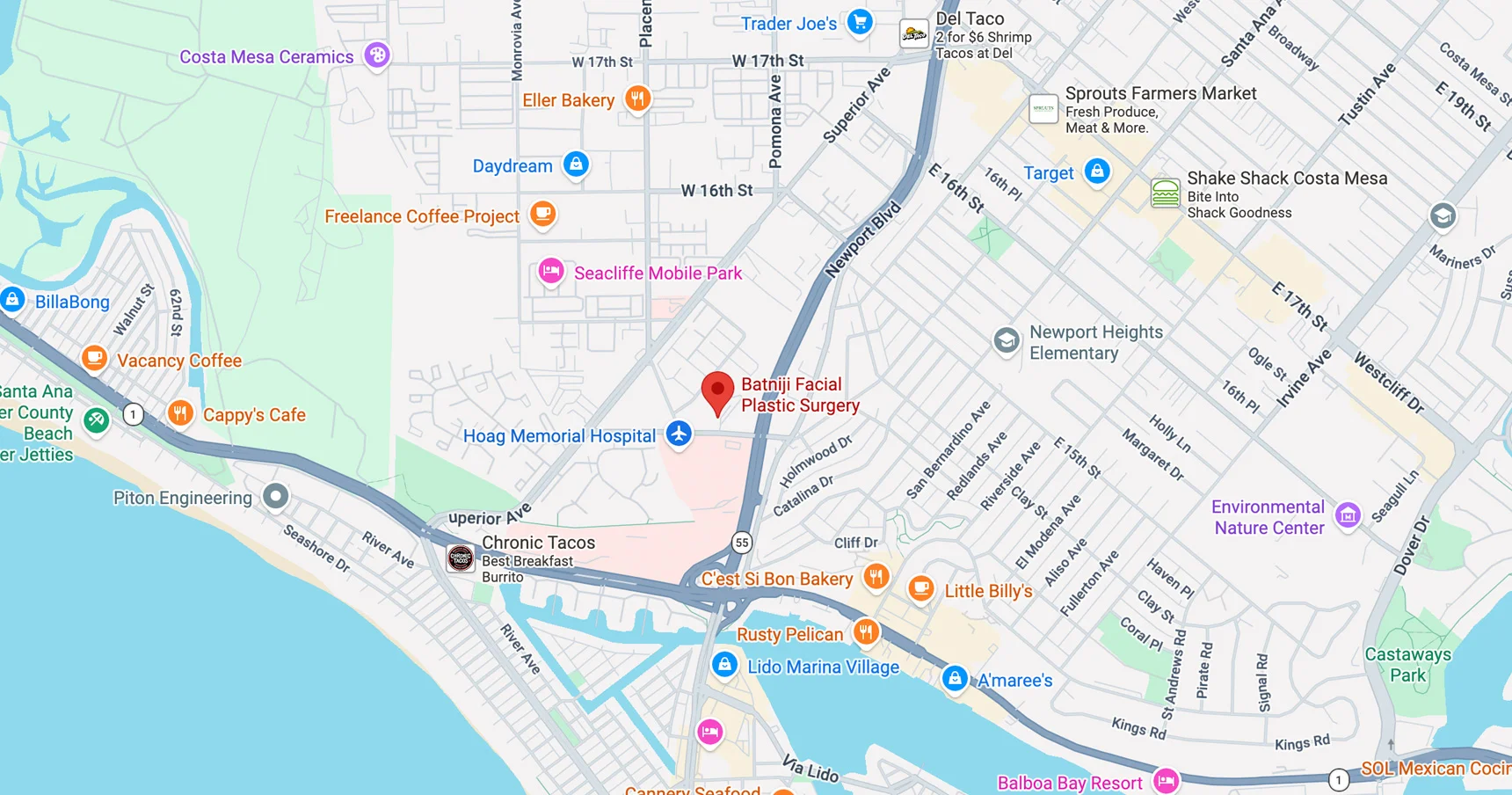
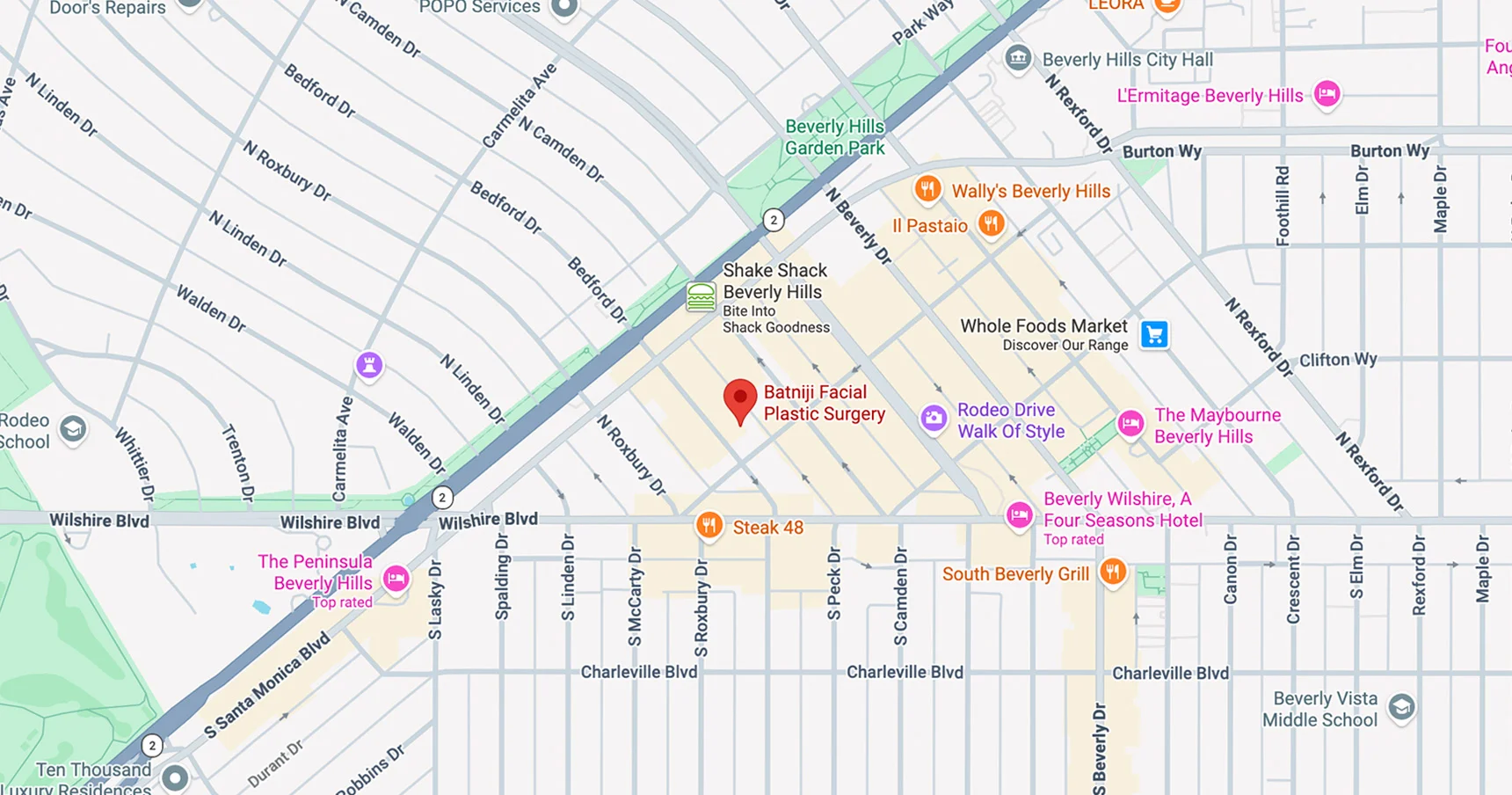
Please do not hesitate to contact our office at 949.650.8882 (Newport Beach) or 310.467.2180 (Beverly Hills) during business hours. For life-threatening symptoms, always call 911 or go to the nearest emergency room first.
Healing is a gradual process. We are here to guide you every step of the way.