What to Expect During Recovery
The following sensations are common and expected during early healing, and typically improve over weeks to months:
- Mild to moderate cheek soreness, tightness, and difficulty fully opening the mouth for the first several days
- Temporary numbness or altered sensation of the cheek — this is expected and almost always resolves over weeks to months
- A small amount of pinkish saliva for the first 24 hours
- Mild asymmetry during early healing (the two sides often swell at slightly different rates)
- Your face may look fuller for the first 1–2 weeks due to swelling — this is not your final result
- A small ridge, firmness, or stitch material along the inside of the cheek — this will soften and resolve over the coming weeks
- Tingling, itching, and occasional brief “electric zinger” sensations as sensation nerves heal
- Final contour and definition continue to refine for up to 6 months as deeper swelling resolves and tissues settle
Oral Care and Incision Care
Your incisions are inside your mouth and are closed with dissolvable sutures that typically fall out on their own within 3-4 weeks. Keeping the mouth clean is the most important step in preventing infection.
- Chlorhexidine oral rinses (prescription): Beginning the day after surgery, gently rinse with chlorhexidine gluconate 0.12% oral rinse (e.g., Peridex or PerioGard) after every meal and snack, and before bed — at least 4–5 times per day for the first 2 weeks. This is a prescription rinse and will be provided by our office. Swish for approximately 30 seconds, then let the rinse fall gently from your mouth.
- Do not vigorously swish, spit, or gargle for the first 48 hours — let the rinse fall gently from your mouth to avoid disturbing the sutures.
- Do not use commercial alcohol-based mouthwashes (such as Listerine) for the first 2 weeks; alcohol can irritate the incisions and delay healing.
- Brush your teeth gently the day after surgery, avoiding the surgical sites for the first 5–7 days. Resume normal brushing of those areas as comfort allows.
- Do not pull on your cheek or lip to inspect the incisions, and avoid touching the area with your fingers or tongue.
Swelling, Bruising, and Head Positioning
- Swelling of the cheeks is expected and typically peaks 48–72 hours after surgery. This is expected and will gradually improve over the following 4 weeks.
- Apply cold compresses (for example, a washcloth soaked in ice water, or a bag of frozen peas wrapped in a thin cloth) to the outside of your cheeks for 20 minutes on, 20 minutes off, while awake. Continue for the first 48 hours to minimize swelling and bruising. Do not apply ice directly to the skin.
- Mild bruising along the cheek or jaw can occur and usually resolves within 7–14 days.
- Keep your head elevated at all times during the first week. Sleep on 2–3 pillows or in a recliner.
- Residual fullness or asymmetry is normal during the early recovery period. Final contour results may take 3–6 months to fully appear as deeper swelling resolves and tissues settle.
Blood Pressure, Nausea, and Vomiting
Keeping your blood pressure well controlled in the first 2 weeks is one of the most important things you can do to minimize bleeding and swelling. Vomiting and forceful retching can significantly raise pressure in the face and increase the risk of bleeding.
- Take all prescribed blood pressure medications exactly as directed.
- Avoid stress, straining, and sudden exertion.
- Take anti-nausea medication as prescribed, even preventively if you feel queasy.
- Take pain medications with food or a small snack to minimize nausea that can occur when taking pain medication on an empty stomach.
Activity and Recovery Timeline
- Take it easy for the first 48 hours. Light walking around the house is encouraged to reduce the risk of blood clots.
- Have a responsible adult stay with you for the first 24 hours after surgery.
- For the first 2 weeks, avoid bending forward, lifting anything heavier than 10 pounds, and any form of straining — including heavy coughing, forceful sneezing, and excessive straining with bowel movements. Squat down instead to pick things up.
- Avoid sexual activity for 2 weeks, as this can raise blood pressure and increase the risk of bleeding.
- Weeks 1–2: you may gradually resume light, non-strenuous activity, as tolerated. Avoid any activity that increases your heart rate or blood pressure, as that may increase the risk of bruising, swelling, and/or bleeding.
- Week 3 onward: you may gradually resume strenuous activity, including weight training, running, and contact sports. Begin slowly and work up to more strenuous activity. It is normal to experience some temporary swelling and tightness with increased activity at this stage.
- Most patients return to desk-based work in 3–5 days, depending on how you feel.
- Do not drive, operate machinery, sign legal documents, or consume alcohol for at least 24 hours after anesthesia, or while taking narcotic pain medication.
- Refrain from yelling, singing loudly, or wide opening of the mouth (such as biting into a large sandwich or apple) for 2 weeks.
Medications and Pain Control
- DO NOT TAKE ASPIRIN, IBUPROFEN, OR OTHER NSAIDs (such as Advil, Motrin, Aleve, Naproxen, or Excedrin) during the 2 weeks before surgery or the first week after surgery. These can increase bleeding risk. If you are on Aspirin under the guidance of a cardiologist, you must ask your cardiologist if it is safe to be off Aspirin for your elective cosmetic procedure.
- Tylenol (Acetaminophen) is safe and a good medication for discomfort after surgery. Do not exceed 3,000 mg of Acetaminophen in 24 hours, and remember that most narcotic pain medications already contain Acetaminophen — do not double-dose.
- We may prescribe Celebrex (Celecoxib) to take twice a day for the first week after surgery. Take this on a fixed schedule, not as needed, even on days you feel comfortable. Celebrex is a COX-2 selective anti-inflammatory that reduces pain and swelling without the bleeding risk of ibuprofen or aspirin. Taking it consistently helps you need less narcotic pain medication.
- If you are still experiencing pain after taking Tylenol and Celebrex, you may take the prescribed narcotic pain medication. Take it with food to minimize nausea, and wean off the narcotic pain medication as soon as possible.
- To minimize constipation from pain medication, stay hydrated, eat fiber-rich foods, and use a stool softener (such as Colace or Docusate) as needed while taking narcotic pain medication.
- Take any antibiotics prescribed by Dr. Batniji until the full course is finished.
Diet
- Begin with clear liquids once you are fully awake, then advance as tolerated.
- Eat a soft diet for the first 5–7 days: yogurt, smoothies, soups (lukewarm — not hot), mashed potatoes, scrambled eggs, soft pasta, well-cooked vegetables, and protein shakes. We recommend a diet that is high in protein to help with the healing process.
- Avoid hot, spicy, acidic (citrus, tomato), crunchy, or sharp-edged foods (chips, crackers, raw vegetables, nuts, seeds, popcorn) for at least 7–10 days. These can irritate the incision or become trapped at the suture line.
- Do not use straws for the first 7 days. The suction can disturb the incision and delay healing.
- Do not chew gum for the first week after surgery. Chewing motion can irritate the incision and delay healing.
- Stay well hydrated.
- Avoid very salty foods for the first few weeks after surgery, as excess sodium can worsen swelling.
- Include fiber-rich foods to help minimize constipation.
Nicotine, Alcohol, and Supplements
- Absolutely NO smoking, vaping, nicotine patches, nicotine gum, any nicotine products, or secondhand smoke exposure for at least 4 weeks before surgery and 4 weeks after surgery. Nicotine constricts blood vessels and can cause poor wound healing, increased risk of infection, and worse scarring.
- Avoid smoking cannabis for at least 2 weeks. Edibles should also be avoided while taking narcotic pain medication.
- AVOID ALCOHOL for at least 1 week after surgery and while taking pain medication. Alcohol use significantly increases the risk of bleeding, bruising, and swelling.
Questions or Concerns?
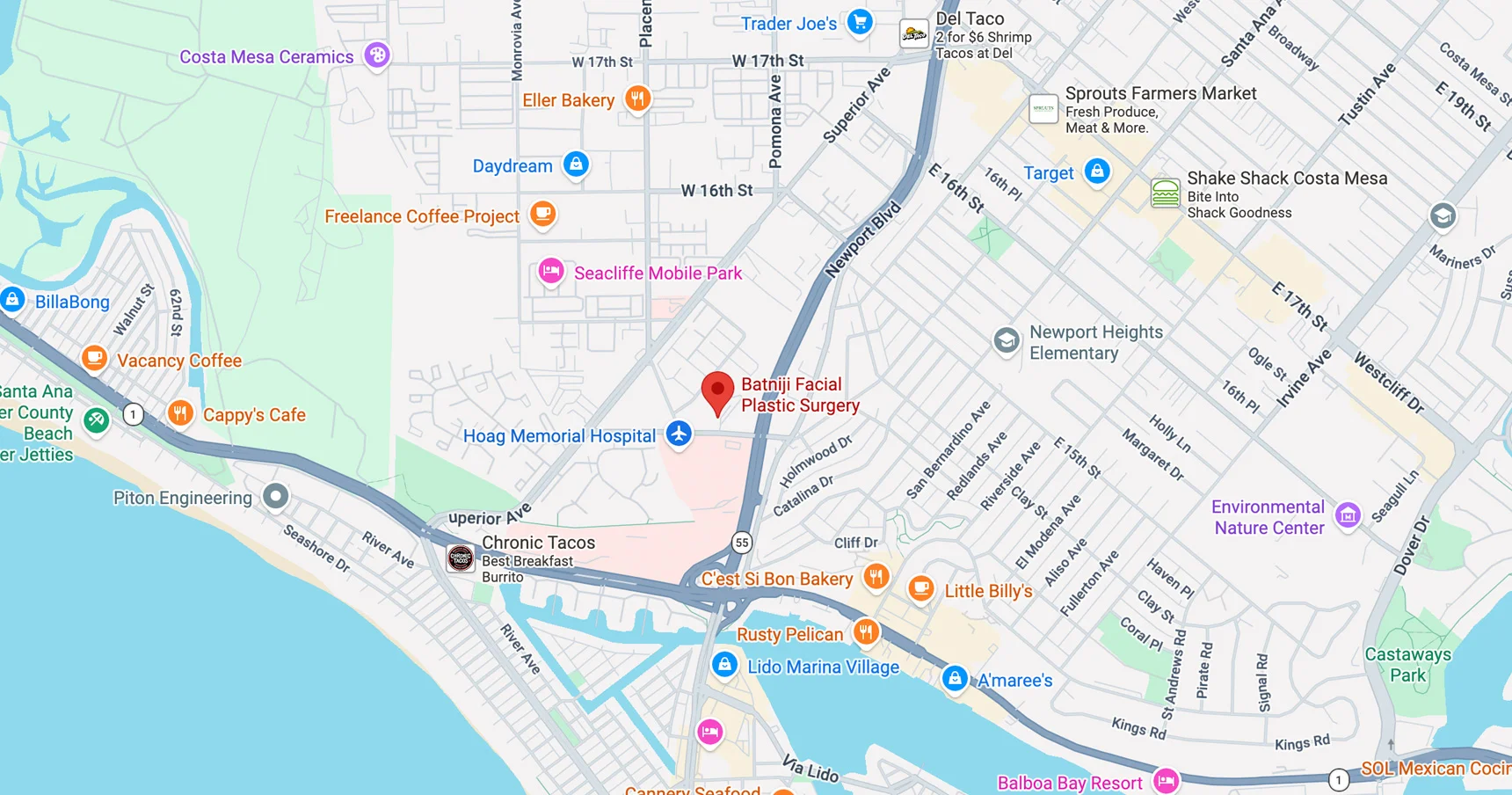
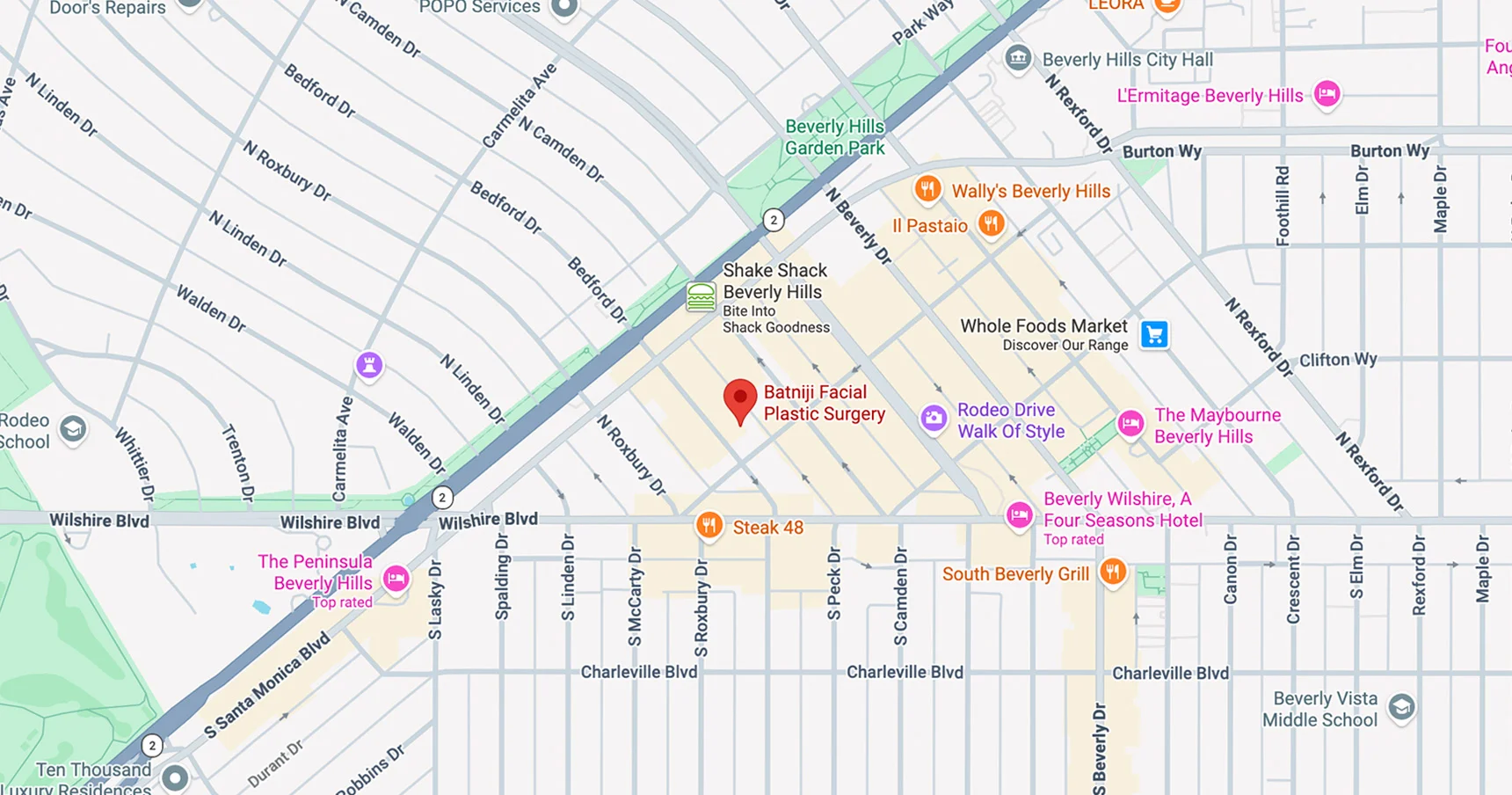
Please do not hesitate to contact our office at 949.650.8882 (Newport Beach) or 310.467.2180 (Beverly Hills) during business hours. For life-threatening symptoms, always call 911 or go to the nearest emergency room first.
Healing is a gradual process. We are here to guide you every step of the way.