
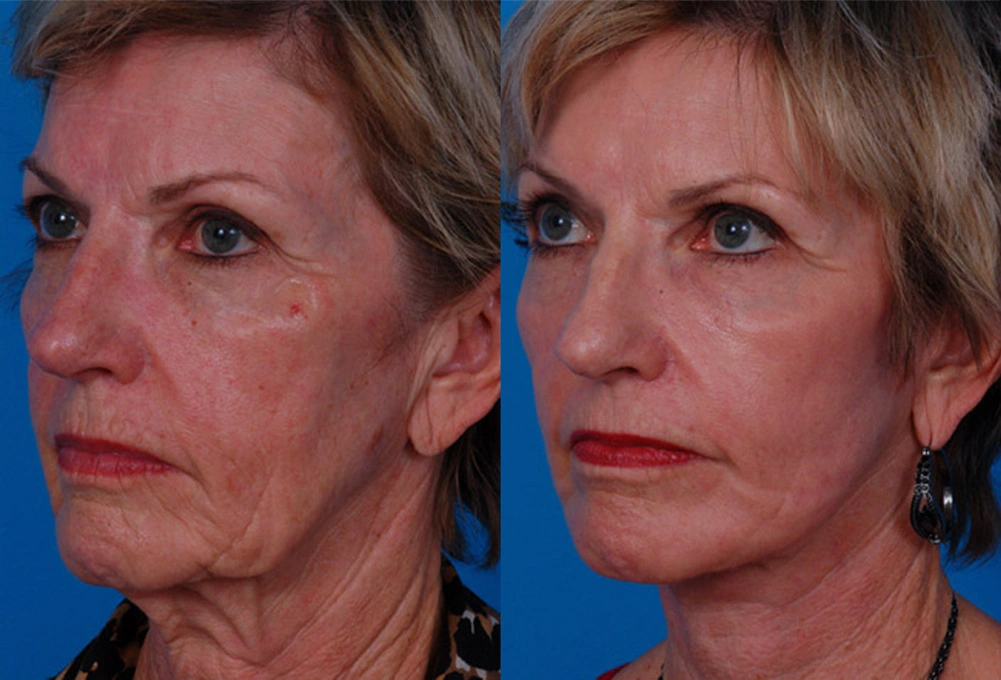
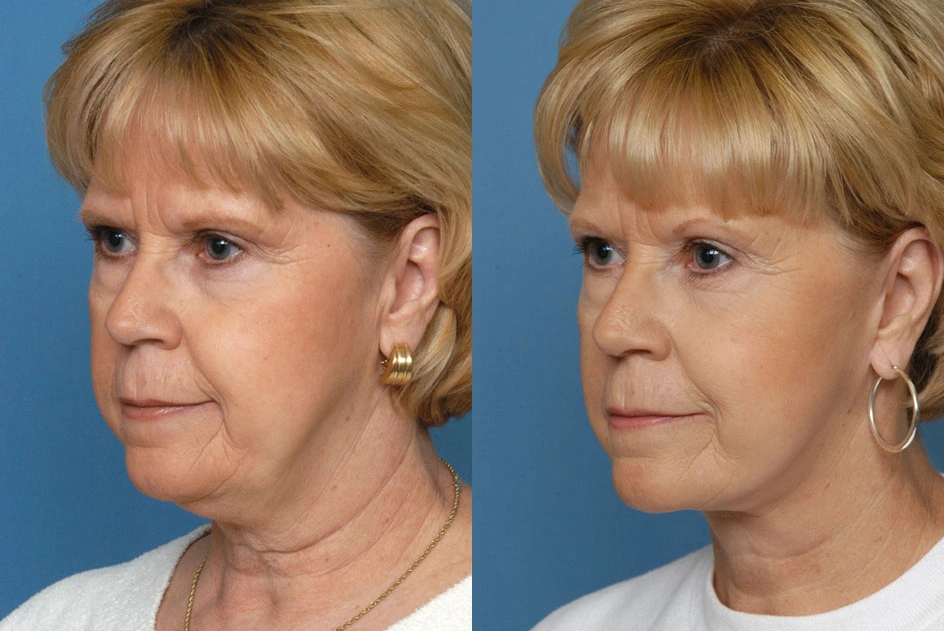
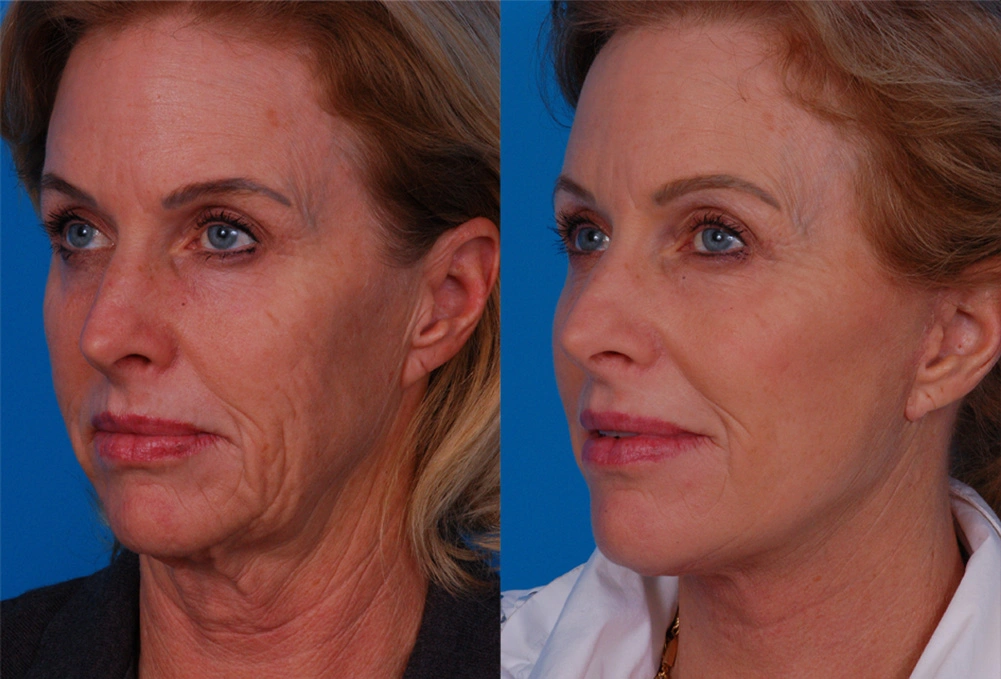
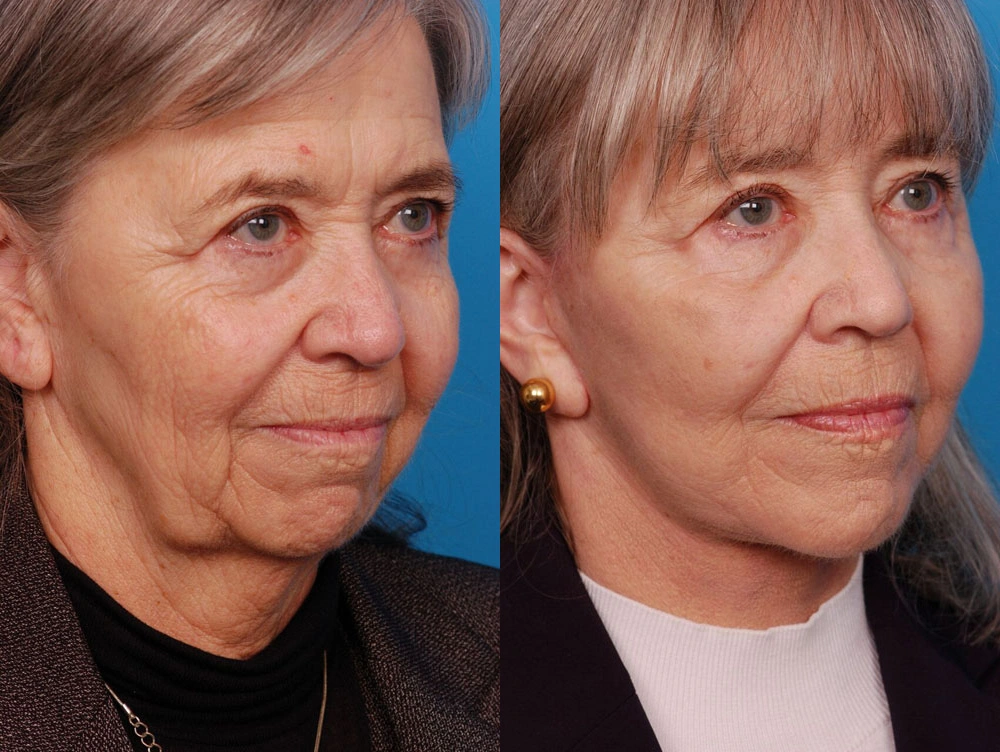

What is a Deep Plane Facelift?
In modern medicine, the standard facelift method is the SMAS (superficial muscular aponeurotic system) facelift. The SMAS is a fibrous system that connects the muscles underlying the face to the dermis, the deeper layer of the skin. A SMAS facelift can reduce or eliminate wrinkles, sagging skin, and other signs of aging.
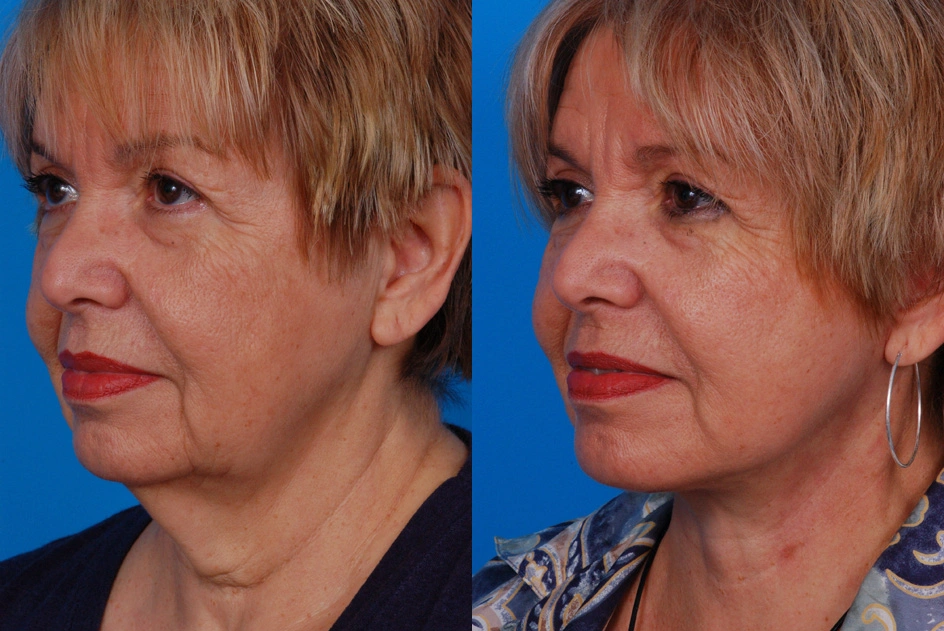
However, sometimes a deeper approach is necessary. A deep plane facelift accesses a deeper plane than a SMAS facelift, producing dramatic, long-lasting results that, in some cases, are even more pronounced than those of a traditional facelift.
During a deep-plane facelift, Dr. Batniji lifts from beneath the SMAS layer and manipulates the ligaments that support the facial muscles. This technique allows for the maximum mobilization of facial features and permits closure without tension. Thus, although a deep-plane facelift uses a plane below the SMAS, it can be less traumatic for the patient than a traditional facelift or a mid-facelift.
If you’re considering facial rejuvenation, it is important to understand the differences between the traditional facelift, the mid-facelift, the mini facelift, and the deep plane facelift. This will help you choose the option that best suits your goals.